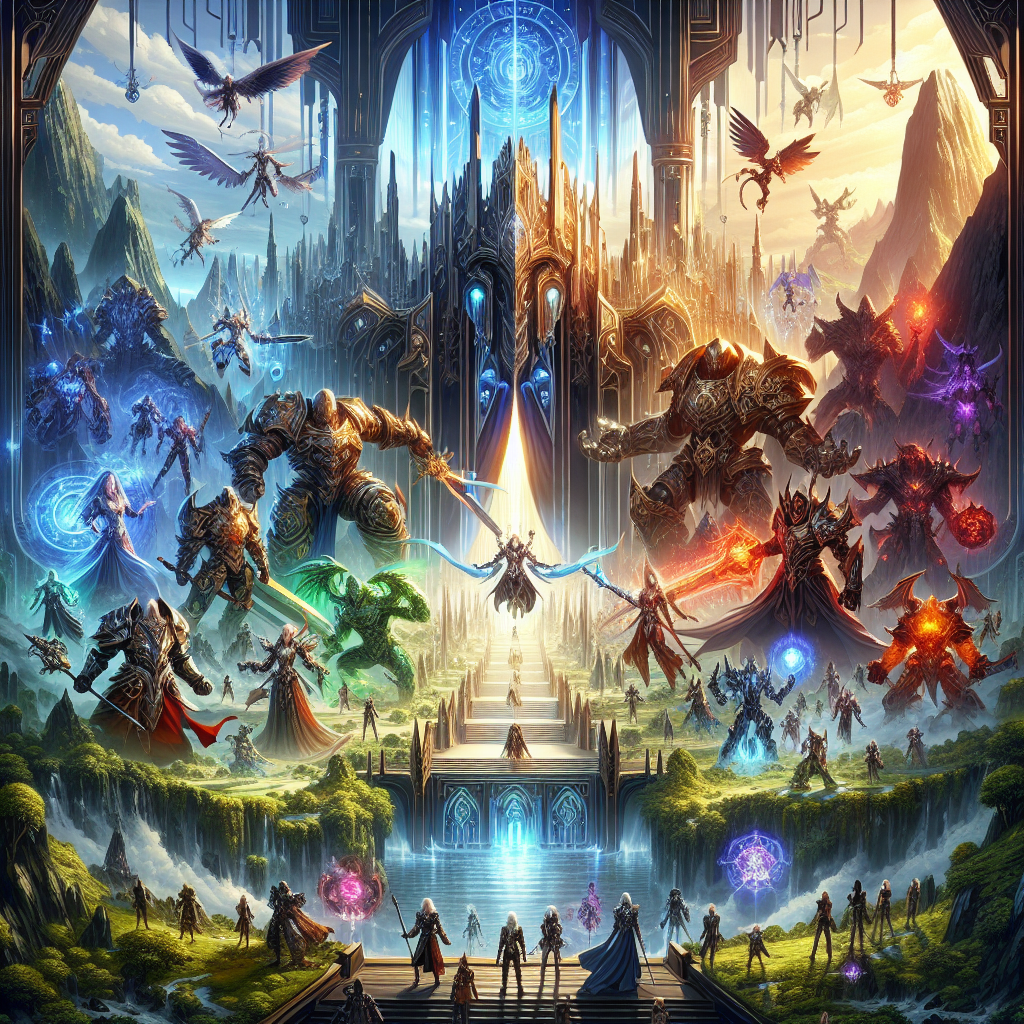
Unraveling the Depths of Guild Politics: A Comprehensive Analysis
Mastering the Art of Leadership and Diplomacy in MMO Guilds for Enhanced Player Progression and Rewarding Collaborative Gameplay
In the vast and ever-evolving landscape of Massively Multiplayer Online (MMO) games, the dynamics of guild politics have become a crucial, yet often overlooked, aspect of player progression and the overall gaming experience. As virtual communities, guilds serve as the backbone of collaborative gameplay, providing a platform for players to unite, strategize, and collectively tackle the challenges that lie ahead. However, navigating the intricate web of interpersonal relationships, conflicting goals, and power dynamics within a guild can be a daunting task, requiring a unique set of leadership and diplomacy skills.
Establishing a Thriving Guild Culture
At the heart of a successful guild lies a strong and cohesive culture, one that fosters a sense of belonging, shared purpose, and mutual respect among its members. This culture is not something that emerges organically; rather, it requires intentional effort and leadership from the guild's core team.
Defining the Guild's Vision and Values
The first step in cultivating a thriving guild culture is to establish a clear and well-defined vision for the guild. This vision should encapsulate the collective aspirations of the members, outlining the guild's long-term goals, playstyle preferences, and the overall atmosphere the leadership aims to create. By aligning the guild's values with this vision, the leadership can set the tone for how members should conduct themselves and interact with one another.
Promoting Open Communication and Transparency
Effective communication is the cornerstone of a healthy guild environment. Guild leaders must prioritize fostering open and transparent channels of communication, encouraging members to voice their opinions, concerns, and ideas. This can be achieved through regular meetings, dedicated discussion forums, or even dedicated communication channels within the game's ecosystem. By creating an environment where members feel heard and their input is valued, the leadership can foster a sense of trust and collaboration.
Implementing Fair and Consistent Policies
To maintain a harmonious guild environment, it is crucial to establish and enforce fair and consistent policies. These policies should address critical aspects of guild operations, such as member recruitment, loot distribution, activity requirements, and disciplinary measures. By setting clear expectations and applying these policies evenly across the board, the leadership can mitigate the risk of favoritism, resentment, and disruptive behavior within the guild.
Developing Effective Leadership and Delegation Strategies
Effective leadership is the cornerstone of a successful guild, as it sets the tone for the entire community and ensures that the guild's vision is consistently executed. However, leading a guild can be a complex and challenging endeavor, requiring a delicate balance of strategic decision-making, conflict resolution, and delegated responsibilities.
Identifying and Nurturing Leadership Talent
One of the primary responsibilities of guild leadership is to identify and nurture emerging leadership talent within the guild. This involves recognizing members who demonstrate strong communication skills, decision-making abilities, and a deep understanding of the game's mechanics and strategies. By empowering these individuals and providing them with opportunities to take on leadership roles, the guild can build a robust and sustainable leadership pipeline.
Delegating Responsibilities and Fostering Accountability
As a guild grows in size and complexity, the leadership team must learn to delegate responsibilities effectively. This not only alleviates the burden on the core leadership but also provides members with a sense of ownership and investment in the guild's success. By clearly defining roles and responsibilities, setting performance metrics, and holding team members accountable, the guild leadership can ensure that tasks are completed efficiently and in alignment with the guild's vision.
Navigating Conflict Resolution and Dispute Mediation
Inevitably, conflicts and disputes will arise within a guild, and it is the responsibility of the leadership to address these issues in a timely and effective manner. This may involve facilitating open discussions, mediating between conflicting parties, and, when necessary, enforcing disciplinary measures. By approaching conflicts with empathy, objectivity, and a commitment to finding mutually acceptable solutions, the guild leadership can maintain a harmonious and productive environment.
Fostering Collaborative Gameplay and Collective Progression
The true strength of a guild lies in its ability to foster collaborative gameplay and collective progression. By leveraging the unique skills and strengths of its members, a guild can tackle even the most formidable challenges and achieve unprecedented levels of success.
Aligning Individual and Collective Goals
One of the key challenges faced by guild leaders is aligning the individual goals and motivations of the members with the collective objectives of the guild. This requires a deep understanding of each member's playstyle, preferences, and aspirations, and then finding ways to seamlessly integrate these individual goals into the guild's overall strategic plan. By creating a sense of shared purpose and mutual investment in the guild's success, the leadership can cultivate a highly engaged and motivated player base.
Developing Comprehensive Skill and Role Matrices
Effective guild management involves understanding the diverse skillsets and roles of its members. By creating a comprehensive skill and role matrix, the guild leadership can identify areas of strength, weakness, and potential growth, and then strategically deploy its resources to maximize the collective capabilities of the guild. This can involve facilitating cross-training, skill development, and the assignment of members to roles that best suit their abilities.
Implementing Robust Progression Systems and Reward Structures
To maintain a sense of purpose and momentum within the guild, it is crucial to establish robust progression systems and reward structures that incentivize collaborative gameplay and collective achievement. This can include tiered advancement opportunities, performance-based recognition, and tangible in-game rewards that motivate members to contribute to the guild's overall success.
Navigating the Evolving Landscape of Guild Politics
As the MMO landscape continues to evolve, so too do the dynamics of guild politics. Guild leaders must be prepared to adapt to changing game mechanics, shifting player preferences, and the introduction of new competitive elements, all while maintaining the cohesion and effectiveness of their guild.
Anticipating and Adapting to Game Updates and Meta Shifts
One of the key challenges faced by guild leaders is the need to anticipate and adapt to game updates and meta shifts that can significantly impact the guild's overall strategy and performance. By closely monitoring the game's development roadmap, analyzing emerging trends, and proactively testing new tactics and approaches, the guild leadership can position the guild to thrive in the face of change.
Navigating Mergers, Acquisitions, and Alliances
In the dynamic world of MMO guilds, strategic partnerships, mergers, and acquisitions can play a crucial role in achieving long-term success. However, these processes can be fraught with challenges, as they often involve reconciling different organizational cultures, aligning objectives, and managing the expectations of both existing and new members. Effective guild leaders must possess the diplomacy and negotiation skills necessary to navigate these complex scenarios and emerge with a stronger, more cohesive guild.
Fostering a Positive and Inclusive Community
In an era where social awareness and inclusivity are paramount, guild leaders must be mindful of fostering a positive and inclusive community that welcomes players of diverse backgrounds, playstyles, and skill levels. This involves actively addressing issues of toxicity, discrimination, and marginalization, and promoting a culture of mutual respect and understanding. By prioritizing these values, guild leaders can not only enhance the overall player experience but also position their guild as a beacon of positivity and collaboration within the MMO ecosystem.
Key Takeaways
1. Establishing a thriving guild culture is essential for fostering a sense of belonging, shared purpose, and mutual respect among members.
2. Effective leadership and delegation strategies are crucial for maintaining a harmonious and productive guild environment.
3. Fostering collaborative gameplay and collective progression is the key to unlocking the true potential of a guild.
4. Navigating the evolving landscape of guild politics requires adaptability, diplomacy, and a commitment to maintaining a positive and inclusive community.
Final Thoughts
In the ever-evolving world of MMO gaming, the art of guild leadership and diplomacy has become a critical skill for players seeking to maximize their progression and enhance their collaborative gaming experiences. By understanding the complexities of guild politics, embracing effective management strategies, and prioritizing the cultivation of a positive and inclusive community, guild leaders can unlock the true potential of their virtual communities and pave the way for rewarding and memorable gaming experiences.